Whole-House Dehumidifier Installation: What to Know
By the Home Humidity team. Updated November 29, 2026.
Quick answer
A whole-house dehumidifier is either ducted on its own or connected to your HVAC system, needs a sloped drain line or a pump and a suitable electrical circuit, and is usually installed by an HVAC professional.
Three ways to set it up
| Setup | How it works | Good for |
|---|---|---|
| Stand-alone | Sits in one area and pulls in nearby air | Basements and crawl spaces |
| Independent ducted | Has its own supply and return registers, separate from heating and cooling | Homes without suitable HVAC ducts |
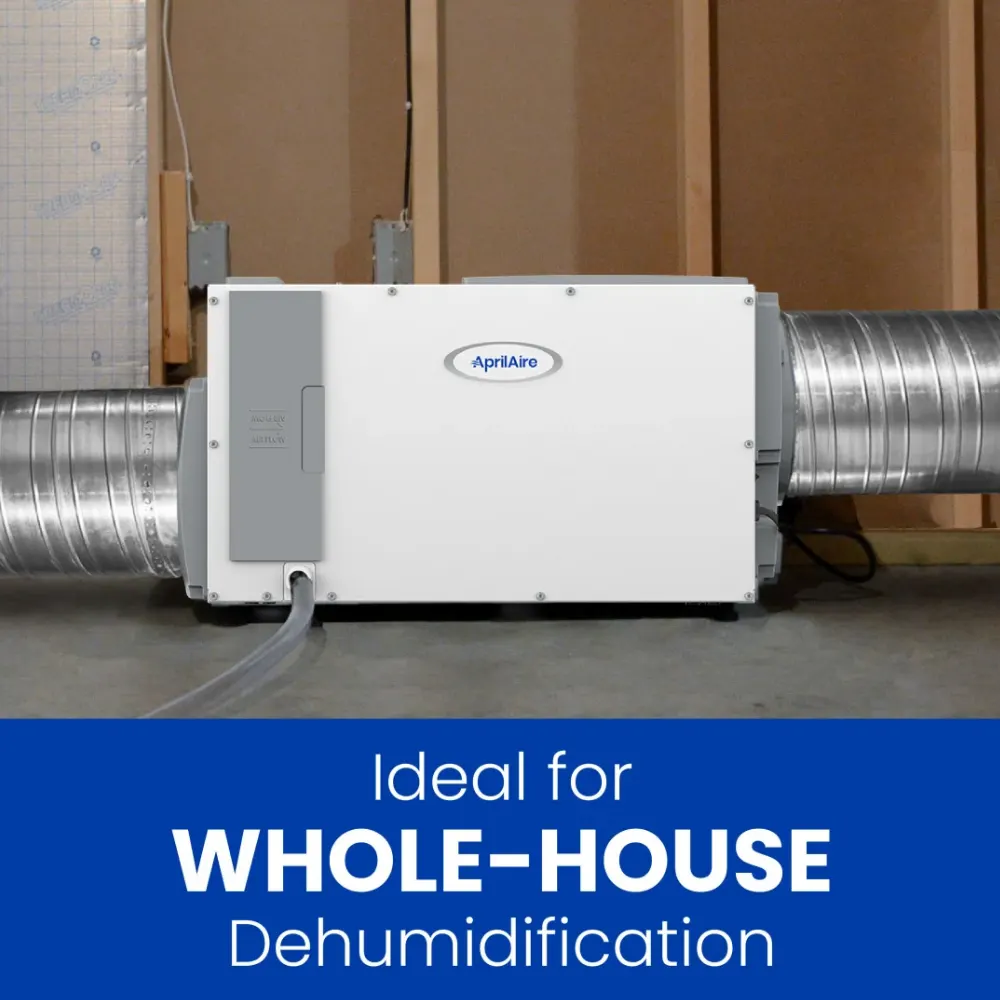
| Connected to HVAC | Ties into the central air handler ducts | Treating the whole house through existing ducts |
Where to connect to your HVAC ducts
When tying into air conditioning ducts, HVAC designers at Energy Vanguard prefer sending dry air to the supply side. Sending it back to the return can make the air conditioner remove less moisture, so the dehumidifier runs longer and uses more energy.
Bypass and injection layouts can reduce new ductwork, but they need dampers and sometimes require the air handler fan to run with the dehumidifier.
Plan the drain first
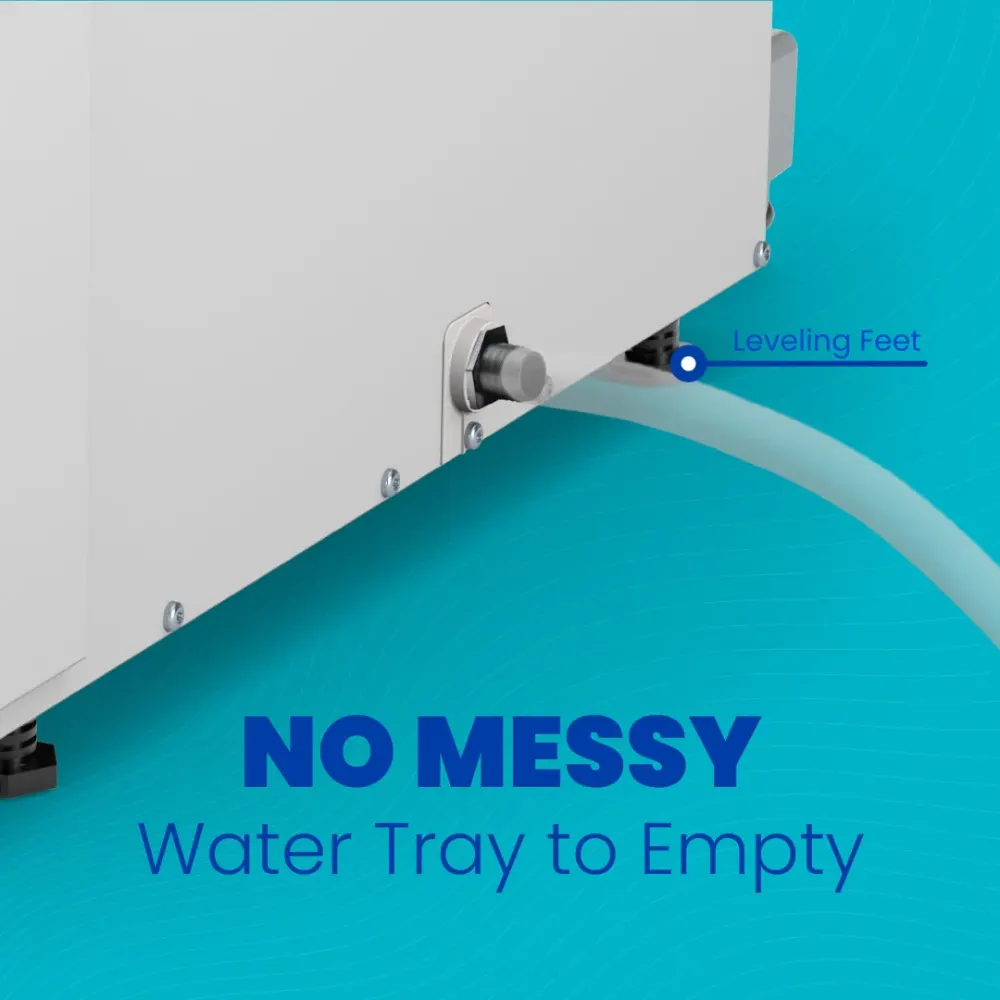
- Run the drain line with a slight downward slope to a floor drain, sump or other approved drain.
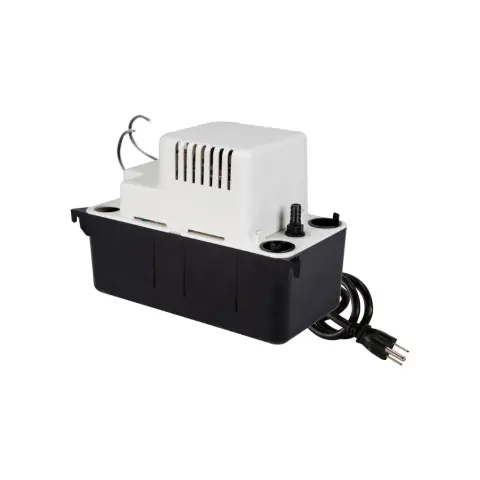
- If the drain is higher than the unit or far away, use a built-in pump or a condensate pump.
- Some manufacturers require a drain trap. Follow your installation manual.
- Check the line regularly, because clogs can make water back up.
Electrical and placement
Check the nameplate and manual for the required circuit. Leave room to remove and wash the filter, keep the unit level and avoid places where water can flood it.
Step-by-step overview
- Size the unit with the square footage and how damp the home is.
- Choose a location with drain and power access.
- Plan the duct layout before cutting anything.
- Set the unit level and connect the duct collars.
- Install the drain line or pump and test it with water.
- Connect power according to the manual and local code.
- Set a target humidity around 50% and check it with a hygrometer.
What drives the installation cost
The price of installation changes from home to home. The main factors are:
- Unit size and features.
- How much new ductwork is needed.
- Whether a new electrical circuit is required.
- Distance to a drain and whether a pump is needed.
- How hard it is to reach the space.
Ask for quotes from local HVAC contractors that list each of these items.
Units made for ducted installation
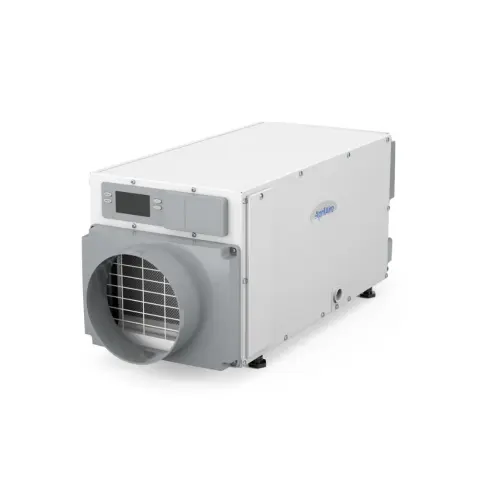
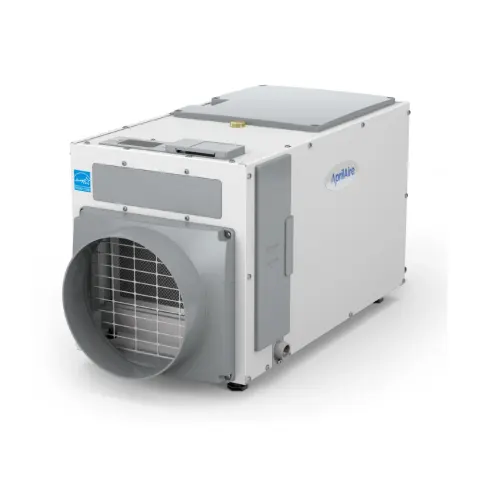
AprilAire E070
- Capacity
- 70 pints/day
- Coverage
- Spaces up to 2,200 sq ft
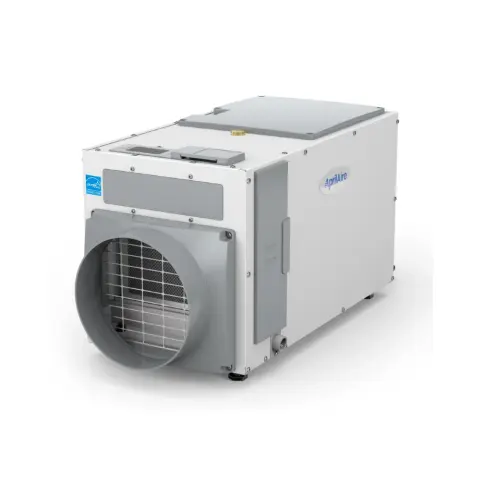
AprilAire E080
- Capacity
- 80 pints/day
- Coverage
- Spaces up to 4,400 sq ft
AprilAire E100
- Capacity
- 100 pints/day
- Coverage
- Spaces up to 5,500 sq ft
See the full AprilAire E070 vs E080 vs E100 comparison.
Frequently asked questions
Where do you install a whole-house dehumidifier?
Common places are a basement, crawl space, attic with access or utility room near the HVAC equipment, wherever there is a drain, power and room to service the filter.
Can I install a whole-house dehumidifier myself?
A simple stand-alone setup with a drain hose can be a DIY project. Duct connections and new electrical circuits are usually best left to a licensed professional.
Should I get a whole-house dehumidifier?
It makes sense when several rooms stay above about 60% humidity or your air conditioner cannot keep up. Measure with a hygrometer first.
Sources
- Building America Solution Center: Whole-house dehumidification
- Energy Vanguard: 4 ways to duct a dehumidifier
- This Old House: How to install a whole-house dehumidifier
This guide is general home information and is not medical advice.